Real Estate House for Sale Post Design: Balancing Aesthetics and Functionality in Digital Marketing
In the competitive landscape of property marketing, the visual presentation of a listing often determines whether a potential buyer stops scrolling or moves on. A well-crafted Real Estate House for Sale Post Design serves as the digital curb appeal for modern agents and agencies. Unlike traditional print flyers, social media graphics must capture attention instantly within a confined space, typically optimized for mobile screens. Understanding the nuances of these designs—specifically professional templates available for platforms like Instagram—is essential for real estate professionals aiming to maintain brand consistency while maximizing engagement.
This article explores the specific attributes of high-quality promotional templates, compares them with custom design alternatives, and provides a practical framework for deciding when to use pre-made assets versus bespoke creations.
Defining the Modern Promotional Template
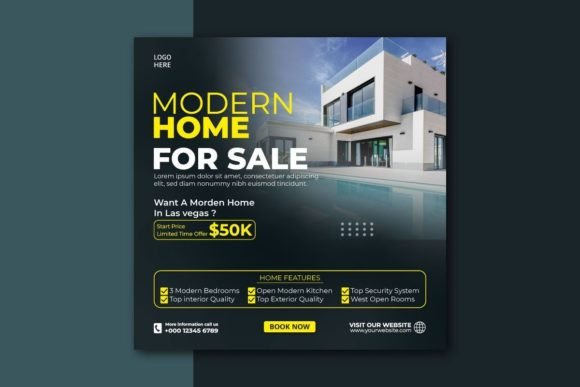
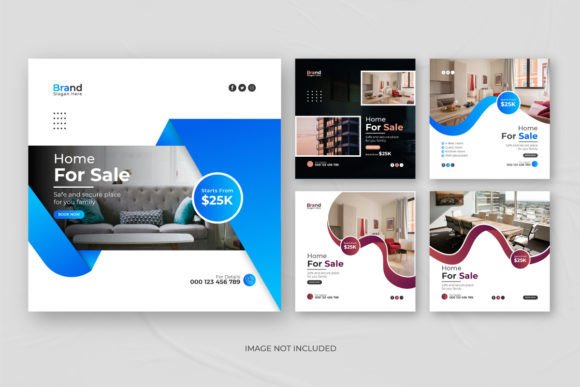
A Real Estate House for Sale Post Design template is not merely a background image; it is a structured layout designed to highlight key property details without overwhelming the viewer. The most effective templates, such as those formatted for Instagram’s square 500x500 pixel dimensions, prioritize clarity and hierarchy. They are engineered to be eye-catchy yet professional, ensuring that the property remains the focal point while supplementary information—such as price, location, or agent contact details—is presented legibly.
The distinction between a generic graphic and a specialized real estate template lies in its organizational logic. Professional templates are built with editable text layers, allowing agents to swap out placeholders for actual listing data quickly. For instance, a template might feature designated zones for the headline "Just Listed," the property address, and a call-to-action button. This structure reduces the cognitive load on the designer, who only needs basic knowledge of software like Adobe Illustrator to modify the content. The emphasis is on efficiency: changing text and colors should be intuitive, requiring no advanced graphic design skills beyond the very basics.
Technical Specifications and Usability
When evaluating a Real Estate House for Sale Post Design, technical specifications play a crucial role in its versatility and final output quality. High-resolution files, typically at 300 DPI (dots per inch), ensure that images remain crisp even if they are repurposed for print materials or viewed on high-density retina displays. While social media platforms compress images, starting with a high-quality source file prevents pixelation and maintains a premium aesthetic.
Color mode is another critical factor. Templates designed in RGB (Red, Green, Blue) color mode are optimized for digital screens, ensuring that colors appear vibrant and accurate on smartphones and computers. In contrast, CMYK is used for print. A versatile template package often includes files in formats compatible with industry-standard software, such as Adobe Illustrator CC. The inclusion of both EPS and AI files provides flexibility; AI files allow for easy editing within Illustrator, while EPS files ensure compatibility with other vector-based design programs.
Furthermore, the use of free fonts is a significant usability advantage. When a template relies on proprietary or paid fonts, it creates a barrier to entry for agents who may not have access to those specific typefaces. By utilizing widely available free fonts, designers ensure that the template looks exactly as intended on any machine, eliminating font substitution errors that can disrupt layout integrity.
Comparing Templates to Custom Design Solutions
Real estate professionals often face a choice between using pre-made templates and commissioning custom designs. Each approach has distinct tradeoffs regarding time, cost, and brand uniqueness.
- Pre-made Templates: These offer speed and cost-effectiveness. A bundle of five designs allows an agent to rotate visuals throughout the week, maintaining freshness without additional effort. They are ideal for high-volume agents who need to post daily listings. However, the limitation is potential similarity; if many agents use the same popular template, brand differentiation may suffer.
- Custom Design: Hiring a graphic designer ensures a unique brand identity tailored specifically to the agency’s ethos. This approach is beneficial for luxury markets where exclusivity is paramount. The tradeoff is significantly higher cost and longer turnaround times. Custom designs are less practical for routine listings but valuable for flagship properties or brand awareness campaigns.
For most mid-tier and high-volume agents, a hybrid approach works best. Using a consistent set of editable templates for standard listings establishes a recognizable visual pattern, while reserving custom designs for premium properties creates a sense of occasion. The key is consistency; whether using templates or custom work, the color palette and typography should align with the agent’s overall branding strategy.
Evaluating Fit: When to Use Editable Templates
Determining whether a Real Estate House for Sale Post Design template is the right tool depends on several operational factors. Agents should consider their workflow volume, technical proficiency, and branding goals.
High-Volume Listings: If an agent manages multiple listings simultaneously, the ability to quickly customize a template is invaluable. The time saved by editing existing text layers rather than designing from scratch allows more focus on client interaction and sales activities. In this context, the "quick and easy to customize" feature of professional templates directly impacts productivity.
Limited Design Resources: Not all real estate teams have in-house graphic designers. For independent agents or small brokerages, templates bridge the gap between amateur aesthetics and professional presentation. As long as the user possesses basic Illustrator skills—such as selecting text tools and changing color swatches—they can produce polished results. The organized layer structure of well-designed templates guides users through the editing process, minimizing the risk of accidental design breaks.
Brand Consistency: Using a standardized set of templates ensures that every post adheres to brand guidelines. This consistency builds trust with followers, who come to recognize the agent’s posts instantly in their feed. It prevents the visual clutter that arises from using disparate design styles for different listings.
Limitations and Considerations
While templates offer numerous advantages, they are not without limitations. One significant constraint is the exclusion of stock images. Most template packages do not include property photos, requiring the user to source and insert their own high-quality images. This means the final aesthetic heavily depends on the quality of the photography provided by the agent. A beautiful template cannot compensate for poor lighting or cluttered property photos.
Additionally, while templates are editable, they are not infinitely flexible. Users are confined to the predefined layout structures. If a listing requires an unusual amount of text or specific graphical elements not accounted for in the design, the template may feel cramped or unbalanced. In such cases, minor adjustments to font size or spacing may be necessary, requiring a keen eye for detail to maintain visual harmony.
Another consideration is software dependency. Templates designed for Adobe Illustrator CC require a subscription to Adobe Creative Cloud. Agents unfamiliar with vector graphics software may face a learning curve. While the basics are straightforward, troubleshooting issues like locked layers or missing links can be frustrating for beginners. Alternatives such as Canva offer drag-and-drop simplicity but may lack the precision and resolution control of professional Illustrator files.
Making an Informed Decision
Choosing the right Real Estate House for Sale Post Design strategy involves balancing efficiency with brand identity. For agents prioritizing speed and consistency, investing in a high-quality, editable template pack is a pragmatic decision. Look for features such as RGB color mode, 300 DPI resolution, and organized layers to ensure professional results. Verify that the template uses free fonts to avoid compatibility issues.
However, if brand uniqueness is the primary goal and budget allows, supplementing templates with occasional custom designs can elevate a portfolio. Ultimately, the effectiveness of any design lies in its ability to communicate value clearly. Whether using a template or a custom layout, the focus must remain on showcasing the property in the best possible light, ensuring that the design enhances rather than distracts from the home itself.
By understanding the strengths and limitations of each approach, real estate professionals can select the tools that best support their marketing objectives, ensuring their listings stand out in a crowded digital marketplace.