Elevating Your Restaurant Brand with a Hot and Delicious Food Social Media Post
In the hyper-competitive landscape of modern dining, visual appeal is no longer just an enhancement; it is the primary driver of customer acquisition. For restaurant owners, marketers, and culinary entrepreneurs, the ability to create a Hot and Delicious Food Social Media Post that stops the scroll is essential. The digital diner makes decisions in milliseconds, influenced heavily by high-quality imagery and professional design. This shift has transformed how food businesses approach their marketing materials, moving away from amateur snapshots toward polished, vector-based designs that convey quality and appetite appeal instantly.
The Visual Economy of Modern Dining
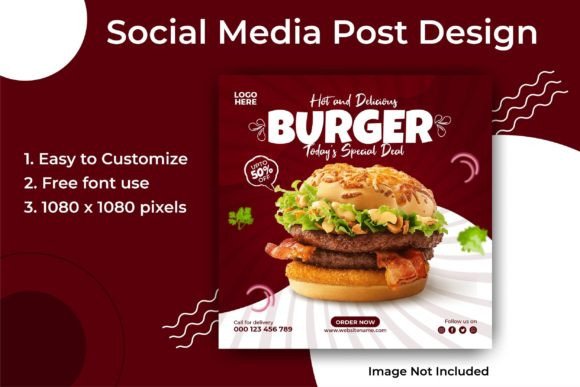
The way consumers discover and choose restaurants has undergone a radical transformation. Today, the journey often begins not with a recommendation from a friend, but with a glance at a social media feed. Platforms like Instagram, Facebook, and TikTok have become the new storefronts for culinary businesses. In this environment, a Delicious burger social media post is not merely an advertisement; it is a digital sample of the experience awaiting the customer.
This trend reflects a broader change in user expectations. Modern audiences are visually literate and discerning. They associate poor graphic design with lower food quality, regardless of the actual taste of the dish. Consequently, the demand for professional, editable templates has surged. Businesses need tools that allow them to maintain a consistent brand aesthetic without requiring extensive graphic design expertise or expensive agency retainers. The rise of fully editable templates addresses this need, bridging the gap between professional branding and operational efficiency.
Why Vector Templates Are Essential for Food Marketing
When creating marketing assets, the technical foundation of your design matters as much as the creative concept. Using a vector file format, such as EPS (Encapsulated PostScript), offers distinct advantages over standard raster images like JPEGs or PNGs. A vector-based Hot and Delicious Food Social Media Post template ensures that every element, from typography to graphical accents, remains crisp and scalable.
For restaurant businesses, this means flexibility. Whether you are adapting a design for a small Instagram story or a large digital billboard, vector graphics do not lose resolution. This scalability is crucial for maintaining brand integrity across multiple channels. Furthermore, vector files are typically smaller in size and easier to edit, allowing marketers to swap out text, adjust colors, and modify layouts quickly. This agility is vital in the fast-paced food industry, where daily specials and seasonal menus require frequent updates to marketing materials.
Key Features of Professional Food Templates
To maximize the impact of your social media presence, it is important to understand what constitutes a high-quality design template. When selecting a resource for your next campaign, look for the following specifications:
- Fully Editable Structure: The template should allow for easy modification of text, colors, and layout elements. This ensures that you can align the design with your specific brand guidelines and promotional needs.
- Illustrator Vector File (EPS): As mentioned, vector formats provide infinite scalability and clean edges, which are essential for professional-looking typography and icons.
- Optimized Dimensions: A size of 1080×1080 pixels is the standard for square social media posts. This dimension ensures optimal display on most platforms without cropping or distortion.
- RGB Color Mode at 72 DPI: Since these assets are intended for digital screens, RGB color mode ensures accurate color representation, while 72 DPI is the standard resolution for web and mobile viewing, keeping file sizes manageable for quick loading.
- Well-Organized Layers: A professionally structured file with labeled layers saves time and reduces frustration during the editing process. It allows designers of all skill levels to locate and modify specific elements easily.
It is important to note that while the template provides the structural and graphical framework, the final visual impact relies on the photography. Most premium templates do not include the main food images, as these need to be unique to your restaurant. Images used in preview mockups are for demonstration purposes only and are not included in the main file. This approach encourages businesses to invest in their own high-quality food photography, which is critical for authenticity and brand differentiation.
Adapting to Changing Consumer Habits
The emphasis on high-quality visual content is driven by changing consumer habits. Today’s diners are not just looking for a meal; they are seeking an experience that is shareable. A well-crafted Delicious burger social media post taps into this desire for social validation and aesthetic pleasure. When customers see appetizing, professionally designed posts, they are more likely to engage, share, and visit the establishment.
Moreover, the rise of food delivery apps has intensified the importance of digital presentation. With many consumers ordering food based solely on online images, the quality of your social media assets directly influences sales. A template that highlights the freshness and appeal of ingredients can significantly boost conversion rates. By using a standardized, high-quality template, restaurants can ensure that every post, whether promoting a burger, a salad, or a dessert, meets a consistent standard of excellence.
Practical Implications for Restaurant Owners and Marketers
For business owners and marketers, adopting professional templates is a strategic move that offers several practical benefits. First, it streamlines the content creation process. Instead of starting from scratch for every post, teams can use a pre-designed framework, reducing the time spent on layout and formatting. This efficiency allows them to focus on other critical aspects of marketing, such as copywriting, community engagement, and strategy.
Second, it ensures brand consistency. Consistent use of fonts, colors, and layout styles helps build brand recognition. When followers see a post, they should immediately recognize it as belonging to your restaurant. A well-organized template facilitates this consistency, even when different team members are creating content.
Third, it lowers the barrier to entry for high-quality design. Not every restaurant can afford a full-time graphic designer. Accessible, editable templates empower small business owners, freelancers, and marketing generalists to produce professional-grade content. This democratization of design tools levels the playing field, allowing smaller establishments to compete with larger chains in terms of visual appeal.
Best Practices for Using Food Templates
To get the most out of your Hot and Delicious Food Social Media Post template, consider the following recommendations:
- Invest in Photography: Since the template does not include food images, prioritize high-quality photography. Use natural light, fresh ingredients, and appealing plating to capture the essence of your dishes.
- Customize Thoughtfully: While the template provides a structure, do not be afraid to tweak colors and fonts to match your brand identity exactly. Small adjustments can make a generic template feel bespoke.
- Keep Text Minimal: Let the food image be the hero. Use concise, compelling copy that highlights key selling points, such as freshness, taste, or special offers.
- Maintain Layer Organization: When editing, keep your layers organized. Name them clearly and group related elements. This practice will save time in future edits and make collaboration easier if you work with a team.
- Test Across Devices: Before posting, preview your design on various devices to ensure it looks good on both mobile and desktop screens. Check for readability and visual balance.
The Future of Food Marketing Design
As technology evolves, so too will the tools and techniques used in food marketing. We are seeing a gradual integration of motion graphics and interactive elements into social media posts. However, the fundamental need for strong static design remains. A solid vector-based template serves as the foundation for these advanced formats, providing the structural integrity needed for animation and interaction.
Furthermore, the trend towards authenticity and transparency in food sourcing means that designs must support storytelling. Templates that allow for ample space for narrative text or ingredient highlights will become increasingly valuable. Restaurants that can combine professional design with genuine storytelling will resonate most deeply with modern consumers.
In conclusion, leveraging a Delicious burger social media post template is more than a design choice; it is a business strategy. By utilizing fully editable, vector-based resources, restaurant owners and marketers can enhance their visual presence, streamline their workflows, and connect more effectively with their audience. In a world where first impressions are digital, investing in high-quality design assets is an investment in the success of your culinary business.